
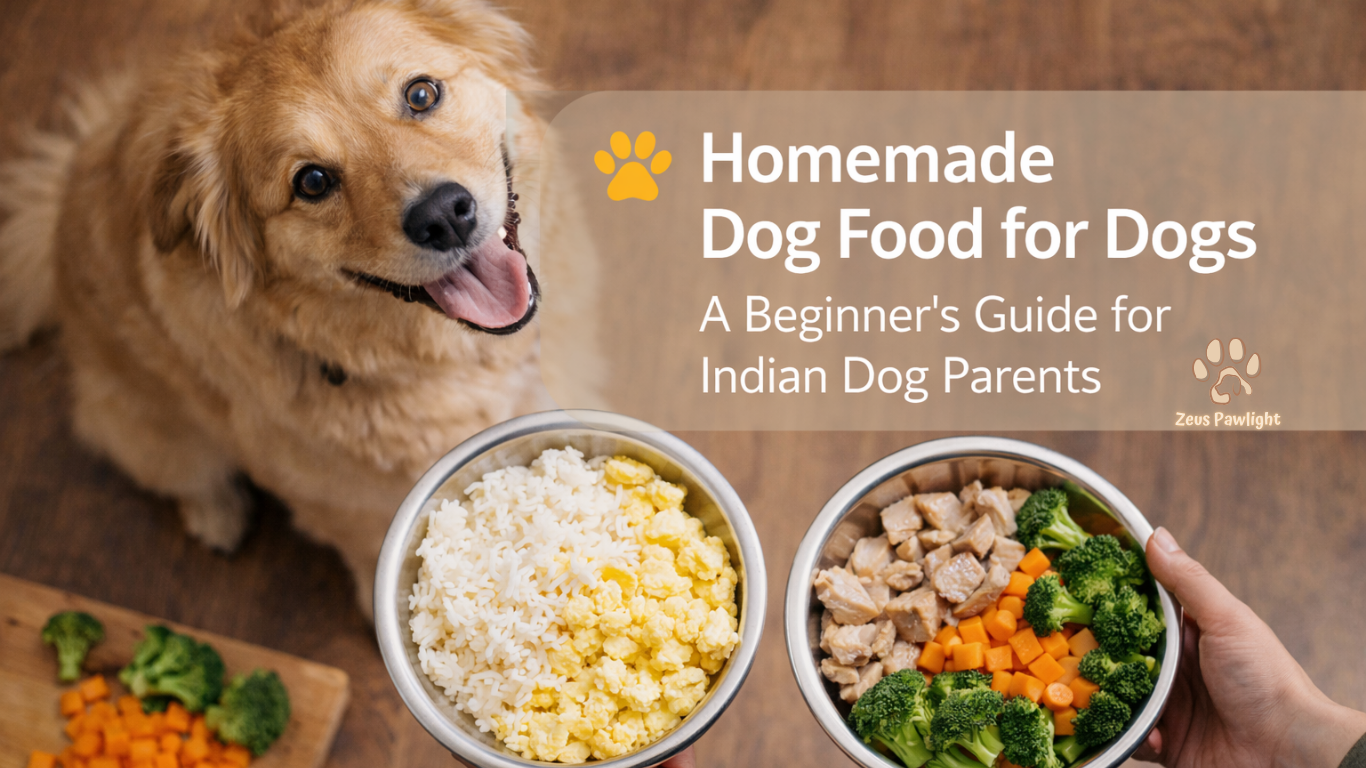

Feeding your dog homemade food often begins with a simple thought:
“I want to know exactly what my dog is eating.”
Across India, many dog parents prefer home-cooked meals over packaged food—using familiar ingredients, cooking with care, and feeding with intention.
However, good intentions alone don’t always lead to balanced nutrition.
Questions naturally follow:
- Is homemade dog food good for dogs?
- What homemade food is safe for dogs in India?
- How much homemade food should I feed my dog?
This beginner’s guide answers these questions clearly and responsibly—without trends, fear, or complicated rules. Just informed choices that support your dog’s everyday wellbeing.
Why Indian Dog Parents Prefer Homemade Dog Food
Homemade dog food is common in Indian households for both practical and emotional reasons.
Many dog parents choose home-cooked meals because ingredients are familiar, easily available, and transparent. Cooking at home offers greater control over what goes into the bowl, especially when dogs lose interest in packaged food or show sensitivity to certain ingredients. For many families, preparing food for a dog also feels more personal and caring.
Homemade feeding isn’t wrong—it simply needs structure and consistency to work well in the long run.
(Bullet-free alternative already applied here ✔️)
Is Homemade Dog Food Good for Dogs?
Yes—homemade dog food can be good for dogs when it is nutritionally balanced and fed consistently.
Most problems don’t come from homemade food itself, but from habits such as feeding only one or two ingredients daily, repeating the same recipe for months, or assuming all cooked human food automatically meets a dog’s nutritional needs.
Dogs don’t need fancy meals. They need balanced nutrition over time, not just fresh food in the moment.
(Bullet list replaced with sentence flow ✔️)
What Makes a Balanced Homemade Dog Meal?
A balanced homemade dog meal is about nutrient balance, not just variety on the plate.
Protein in Homemade Dog Food
Protein supports muscle health, tissue repair, and daily activity.
In Indian households, commonly used protein sources include chicken, eggs, fish (occasionally), and paneer in moderation. Feeding only one protein source continuously can lead to nutritional gaps, which is why gentle protein rotation supports better overall balance.
(Short inline list → sentence style ✔️)
Carbohydrates for Dogs: Are They Necessary?
Carbohydrates provide energy and support digestion when used appropriately.
Options such as rice, millets, and oats are commonly included in homemade meals. Carbohydrates themselves are not harmful; problems arise when they dominate the plate and crowd out protein and fats.
Vegetables in Homemade Dog Food
Vegetables add fibre and micronutrients that support digestion.
However, vegetables do not replace protein or fats. Overloading a meal with vegetables can dilute its nutritional value. They should support the meal—not become the meal.
Fats: The Most Ignored Nutrient
Dietary fats play an important role in supporting energy levels, skin and coat condition, and nutrient absorption.
Many homemade dog meals unintentionally become too low in fat, especially when “lean” food is overemphasized. Restriction isn’t the goal—balance is.
Common Homemade Dog Food Mistakes (Beginner-Friendly)
Certain mistakes are extremely common, especially for first-time dog parents.
These include feeding the same homemade meal every day, adding too many vegetables while under-serving protein, ignoring portion size, assuming all cooked human food is dog-safe, and changing meals too frequently without gradual transitions.
Homemade feeding works best when meals are planned, not improvised.
(Bullets removed for smoother editorial flow ✔️)
How Much Homemade Food Should You Feed Your Dog?
There is no single portion size that works for every dog.
The amount of homemade food a dog needs depends on factors such as size, age, activity level, and daily routine. Two dogs of the same weight may still require different portions.
Rather than exact measurements, focus on consistent portions, adjusted gradually based on your dog’s response.
This topic will be explored in detail in a dedicated guide.
Homemade Dog Food vs Packaged Dog Food
This is not an either-or decision.
Packaged dog food can be convenient, consistent, and easy to manage in busy routines. Homemade dog food offers transparency, customization, and emotional reassurance.
Problems arise when both are mixed randomly without understanding balance. The right choice depends on your dog and your lifestyle.
Can You Switch to Homemade Dog Food Immediately?
If your dog currently eats packaged food, transitions should be gradual.
Sudden changes often cause digestive upset—not because homemade food is harmful, but because dogs need time to adjust. Starting slow, observing calmly, and prioritizing consistency over experimentation leads to better outcomes.
Final Thoughts: Feeding Homemade Dog Food With Confidence
Homemade dog food is not about trends, viral recipes, or copying someone else’s bowl.
It’s about understanding basic dog nutrition, feeding with intention, and staying consistent over time. When done thoughtfully, homemade feeding becomes less stressful and more confident—for both you and your dog.
Because informed feeding is kinder than guesswork.